


In most countries, city choice affects your rent and your social life. In Australia it can also affect how long you are allowed to work after you graduate — which makes it a bigger decision than students usually treat it as.
Here is an honest comparison of the cities Nepali students most often consider, including the regional classification that changes the post-study equation. For a full breakdown of monthly expenses, see our cost of living guide, and for the wider picture on courses and universities, see our study in Australia page.
The regional classification nobody explains properly
For post-study work purposes, Australia divides the country into three categories. Sydney, Melbourne and Brisbane are Category 1 — major cities with no additional entitlement. Perth, Adelaide, the Gold Coast, Canberra, Newcastle, Wollongong, Geelong and Hobart sit in Category 2 as cities and major regional centres. Everywhere else is Category 3.
Graduates who studied and continue to live in a Category 2 or Category 3 area may be eligible for the Second Post-Higher Education Work stream, adding one to two years to their Temporary Graduate visa depending on the category.
This is why Adelaide and Perth deserve far more attention from Nepali students than they get. You pay less rent, and you may be entitled to stay and work longer. Confirm current classifications with the Department of Home Affairs before deciding, because designations are reviewed periodically.
| The trade-off in one sentence: Sydney and Melbourne give you the largest job market during study; Adelaide, Perth and Hobart give you lower costs and potentially a longer work entitlement afterwards. |
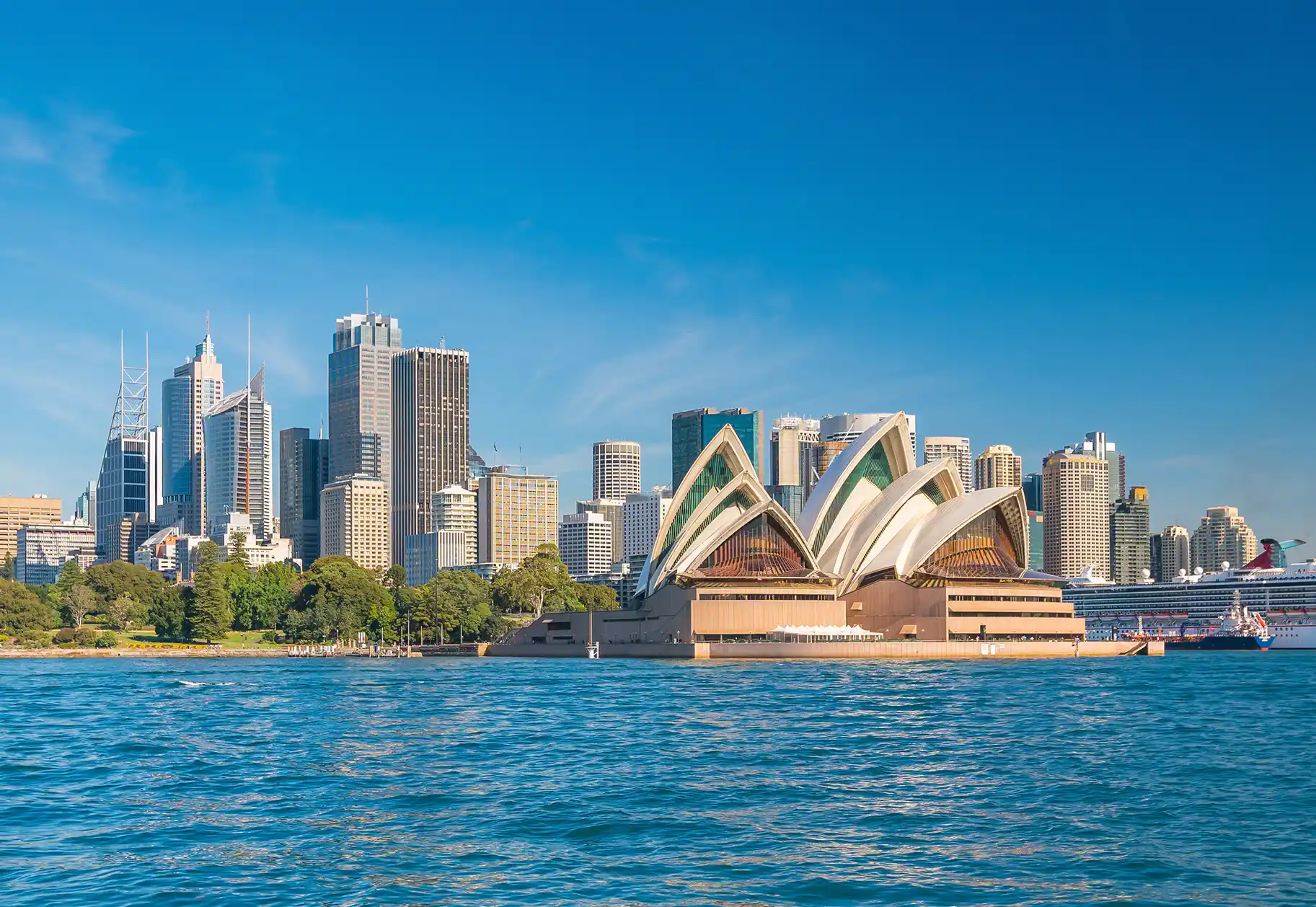
Sydney
Australia's largest city and its financial centre, with the widest range of institutions and the strongest part-time job market in the country. It also has the highest rent in Australia by a clear margin, and the rental market has been genuinely difficult in recent years.
Indicative monthly living costs run AUD 2,400 to 3,100. The Nepali community is large and long-established, particularly in the western suburbs, which makes finding accommodation and a first job easier than the raw numbers suggest.
Category 1 for post-study work purposes, so no additional Temporary Graduate visa entitlement. Best for students prioritising the job market and programme range who can absorb the rent.
Melbourne
Widely regarded as Australia's student city, with the largest international student population, an excellent tram and train network, and a strong cultural scene. Home to several highly ranked universities.
Indicative monthly living costs of AUD 2,200 to 2,800 — high, though generally below Sydney. Winters are genuinely cold by Australian standards and the weather changes constantly, which surprises new arrivals.
Category 1, so no additional post-study work entitlement. Best for students who want a large campus culture and strong public transport without Sydney's rent.
Brisbane
Queensland's capital, warmer and more relaxed than the southern capitals, with a growing economy and strong universities. It sits between the major capitals and the regional centres on cost.
Indicative monthly living costs of AUD 1,900 to 2,400. The summer heat and humidity are a significant adjustment, and the wet season brings genuine storms.
Category 1 for post-study work purposes despite being smaller than Sydney and Melbourne — a point students frequently get wrong. Best for students wanting capital-city amenities at moderately lower cost.
Adelaide
The best-value capital city in Australia for international students, and the one most consistently overlooked. Compact, easy to get around, with strong universities and a substantially lower cost of living than the eastern capitals.
Indicative monthly living costs of AUD 1,650 to 2,100 — roughly AUD 8,000 a year less than Sydney. The part-time job market is smaller, though the lower cost base offsets much of that.
Category 2, so graduates may be eligible for additional Temporary Graduate visa time. For a cost-conscious student, Adelaide is frequently the strongest overall proposition in Australia.
Perth
Western Australia's capital, driven by a strong resources and engineering economy, with excellent weather and beaches. It is also the most isolated major city in the world, which is a real consideration.
Indicative monthly living costs of AUD 1,850 to 2,350. Flights to the east coast are long and expensive, so visiting friends interstate is not casual.
Category 2, with the same additional post-study work potential as Adelaide. Best for engineering, mining, geoscience and related fields, where the local industry connection is genuine.
Canberra, Hobart and regional centres
Canberra is the national capital, small, safe and well-planned, with strengths in public policy, international relations and research. Hobart is smaller still, the cheapest option among these, with a distinctive lifestyle and a compact university.
Indicative monthly living costs of AUD 1,500 to 2,000. Both are Category 2, and Category 3 regional centres offer the largest additional post-study work entitlement of all.
These suit students whose priority is finishing with the smallest possible debt and the longest possible work entitlement, and who do not need a large city.
Side-by-side comparison
City | Monthly living cost | PSW category | Strongest fields |
| Sydney | AUD 2,400 – 3,100 | Category 1 | Business, finance, IT, health |
| Melbourne | AUD 2,200 – 2,800 | Category 1 | Broad — largest student city |
| Brisbane | AUD 1,900 – 2,400 | Category 1 | Health, engineering, education |
| Perth | AUD 1,850 – 2,350 | Category 2 | Engineering, mining, geoscience |
| Adelaide | AUD 1,650 – 2,100 | Category 2 | Health, nursing, engineering, wine |
| Canberra / Hobart | AUD 1,500 – 2,000 | Category 2 | Policy, research, environment |
Which city suits which student
The budget-focused student. Adelaide or Hobart. The saving against Sydney runs to roughly AUD 9,000 to 12,000 a year, and both are Category 2 for post-study work purposes, so you may also be entitled to stay longer.
The career-focused student. Sydney or Melbourne. More employers means more part-time work while studying and a stronger position when your Temporary Graduate visa begins. Accept that rent will consume a large share of your budget and plan for it.
The student planning for the longest work entitlement. A Category 2 or Category 3 location, studied in and lived in continuously. Confirm the classification of the specific campus address with the Department of Home Affairs, because a university can have campuses in different categories.
FAQ
Hobart and Adelaide are the most affordable, with indicative monthly living costs of AUD 1,500 to 2,100 compared with AUD 2,400 to 3,100 in Sydney.
Both are classified as Category 2 cities and major regional centres, so graduates who studied and continue to live there may be eligible for the Second Post-Higher Education Work stream, adding one to two years. Confirm current classifications with the Department of Home Affairs.
No. Brisbane is Category 1 alongside Sydney and Melbourne, so it carries no additional Temporary Graduate visa entitlement. This is a common misunderstanding.
Sydney, followed by Melbourne and Brisbane. Smaller cities have more limited part-time markets, though substantially lower living costs reduce how much you need to earn.